
2026-10-18 · 9 min read
How We Reproduce a Giant Perfume Bottle Precisely
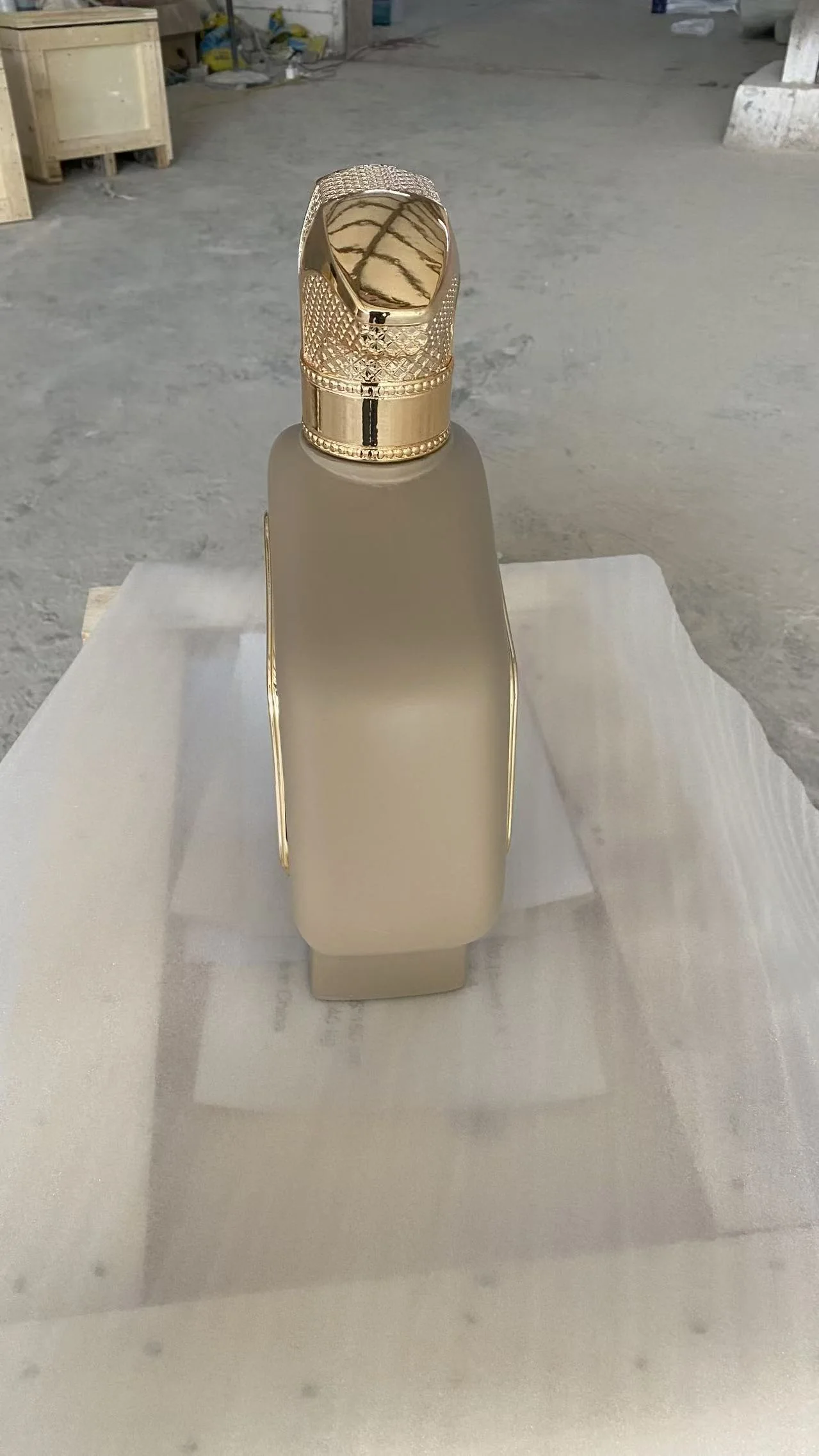
A perfume bottle becomes difficult to copy when it gets bigger. A line that looks straight on a retail bottle may bow across a 2 m body. A shallow cap relief can turn into a heavy block. A label that is a few millimetres off-centre becomes the first thing a viewer sees.
We have made this type of display at 2 m, 1.4 m and 0.4 m high. The height changes. The requirement does not: the enlarged object still has to read as the same bottle.
That starts with measurement, then moves through shape, structure and surface work. Decoration comes last.
The reference bottle is the control document
We prefer to work from an actual bottle when one is available. It can be scanned in 3D, measured by hand and photographed from controlled angles. Each method catches a different problem. A scan records the main curves. Hand measurements confirm hard edges and joining points. Photographs show where the finish changes from gloss to satin, or from printed colour to metallic foil.
A digital model is then scaled to the required height. We do not redraw the silhouette by eye. Shoulder width, neck diameter, cap height and the position of the front label remain tied to the reference proportions.
There is one practical limit. A scan does not decide how a large prop should stand, travel or be assembled. Those decisions belong to the build drawing.
A reinforced fiberglass body carries the scale
The body uses fiberglass with an internal reinforced structure. The outer shell gives us the bottle form; the reinforcement helps the larger piece retain that form during handling and display.
The support plan is set for the finished height. A 0.4 m sample can be handled as one compact object. A 1.4 m or 2 m display places more demand on the base, lifting points and the way the cap meets the neck. We confirm these points before surface finishing because a late structural correction usually damages the paintwork.
Fiberglass also gives the finishing team enough material to trim, fill and sand the shoulders and corners. That matters on a bottle with broad, quiet surfaces. A small ripple is easier to see on a plain panel than on a heavily patterned object.
Labels are rebuilt, not enlarged as a screenshot
The front label is part of the object, not an afterthought. We match its position against fixed points on the bottle: the neck centreline, shoulder break and base. This keeps the layout in the right place when the bottle is scaled from 0.4 m to 1.4 m or 2 m.
Artwork also needs production checks. Fine lines can disappear in cutting or printing. Foil areas may need a separate metallic layer. Raised plaques need edge depth, corner radius and relief height defined before fabrication. Where the source artwork is too small, we ask for vector files rather than inventing missing letterforms.
This is where inaccurate enlargement usually shows. The bottle shape may be close, but the label sits too high, the border is too thick, or a logo has been stretched to fill space. We compare the applied label with the approved layout before final coating.
Client branding is reproduced only with the client's authorization. The images in this article therefore avoid showing the branded front plaque.
The cap is treated as a sculpture
A decorative cap has its own geometry. Facets, carved bands and raised motifs have to remain readable from several metres away without becoming crude.
We separate the cap into measurable zones: the base collar, the main relief and the top profile. The relief is cleaned up after forming, then checked from the front, side and rear. Metallic finishing comes after those edges are stable. Paint cannot rescue a soft carving.
The photographed project used a gold-coloured sculpted cap. Colour is not fixed to this example. The bottle body, label treatment, cap finish and accent colour can be matched to an approved reference or colour specification.
Faux gemstones need seats, spacing and a sample check
For bottle designs that include faux gemstones, the stone is only one part of the detail. The seat controls its angle. The border controls how much of it remains visible. Spacing controls whether a repeated row looks deliberate or drifts across the enlarged surface.
We set these positions from the approved drawing and test the appearance on the sample section. Stone colour can be matched to the cap or label palette. Final selection still needs a physical or approved visual reference because screen colour is not a reliable finish standard.
The current workshop photographs do not show the faux-gem detail clearly enough to use as proof. We would rather state that limit than point to a reflection and call it a gemstone.
Three heights, one visual identity
The 2 m version is built to command a retail floor or event space. The 1.4 m size keeps a strong presence with easier placement. The 0.4 m version works as a counter or sample-scale display.
They should still look related when photographed together. That means preserving the same silhouette, label hierarchy, cap character and colour relationship across all three heights. Hardware and internal reinforcement can change with scale. The visible identity should not.
What we need before production
Send the original bottle if possible. If shipping it is impractical, provide straight-on front, side, rear, top and bottom photographs with a ruler in frame. We also need the target height, installation location, colour reference, vector label artwork and any cap or faux-gem samples that control the finish.
A useful approval pack contains:
- overall dimensions and target height;
- front, side and rear views;
- label artwork and placement dimensions;
- cap relief and metallic-finish reference;
- faux-gem colour, shape and setting position;
- base, access and handling requirements.
Minimum order is from 1 piece, and sampling takes around 15 days. If your project starts from an existing retail bottle, send the bottle dimensions and the required display height through ourcontact page. You can also review ourfactice perfume bottle display capability before preparing the artwork pack.
Common questions
How do you keep a bottle proportion right when it is scaled up?
We scan the actual bottle where one is available, then check the scan against hand measurements at the shoulder, neck and base. The model is scaled from that reference rather than redrawn by eye, so shoulder width, neck diameter, cap height and label position all follow the original proportions.
Which heights can a display bottle be made in?
Height is quoted per project rather than limited to a catalogue size. We have built this type of display at 2 m, 1.4 m and 0.4 m high. The structure, base and lifting points are set for the finished height before surface finishing begins.
Can the cap and any faux gemstones be matched to our design?
The cap is treated as a sculpted part: the collar, the relief and the top profile are formed and cleaned before metallic finishing. For designs that include faux gemstones, the seat, border and spacing are set from the approved drawing, and the stone colour is checked against a physical or approved visual reference because screen colour is not a reliable finish standard.
What is the minimum order, and how long does a sample take?
Minimum order is from 1 piece, and sampling takes around 15 days. Production lead time is quoted against your specification, because a 2 m crated piece and a 0.4 m counter piece are not the same schedule.
Working from a physical bottle? Read the1.1 m fiberglass factice build for a closer look at the shell and finishing sequence, or theordering FAQ on materials, sampling and shipping.