
2026-10-14 · 9 min read
Acrylic vs Fiberglass for Giant Display Props: A Guide
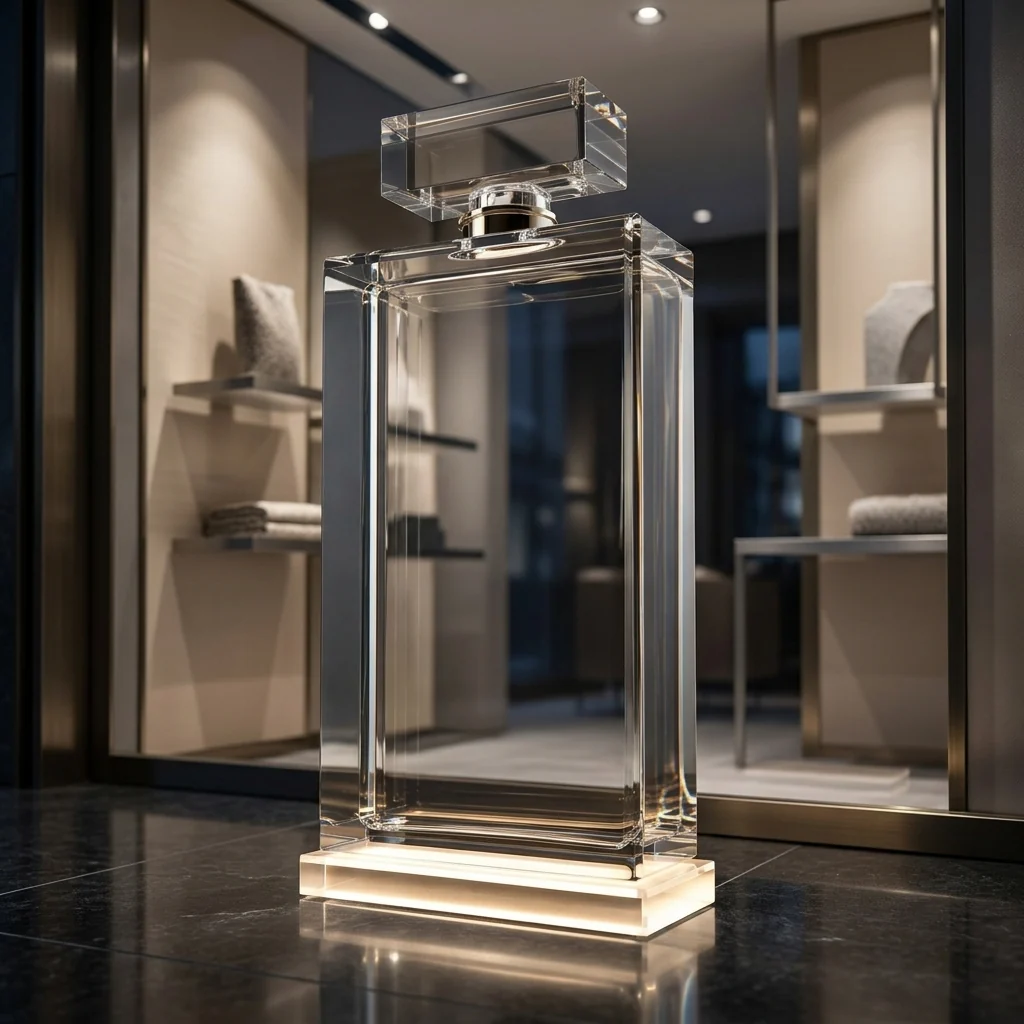
A display prop gets specified twice. Once for what it looks like in the render, and once for how it reaches the shop, gets through the door and stands up to a year of being leaned on. Acrylic and fiberglass make those two conversations very different, and the size of the piece usually decides which conversation you are having.
What the material actually decides
Material is not a finish decision. It fixes four things before a drawing is signed off: the weight of the piece, how many seams it will have, which finishes are available, and whether it ships in one part or four. Colour, gloss and engraving are all decided later and can be changed. Those four cannot.
We build oversized replicas from 0.4 m to 1.1 m as standard, larger on request. The material sits at the front of the quotation rather than the back, because it settles the crate along with the model.
Acrylic: transparent, precise and heavy
If the brief says the customer has to see through the piece, cast acrylic is the only honest answer. Our 1.2 m prism bottle display is built from 8 mm cast sheet, over a body 90 cm high, 30 cm wide and 12 cm deep, and the finished model runs about 25 kg.
Cast sheet, not extruded. Cast machines more predictably, bonds more cleanly, and polishes to a deeper clarity, which is what you are buying when the material itself is the finish. Visible edges are cut oversize by saw and then machined and polished, because a saw edge is opaque and grey where a worked edge is clear and carries a line of light along its length. Internal corners are radiused rather than cut sharp: a sharp corner concentrates stress and invites a crack, and a radius is easier to polish evenly without leaving a flat spot.
Transparent parts are joined with a solvent cement that wicks into the gap and welds the two faces together. Where the fit is not tight and even, the joint refracts light differently from the material around it and reads as a bright stripe. That is the clearest possible signal that a piece was assembled rather than made, and it cannot be sanded out afterwards, because nobody can reach the middle of a bonded seam.
Fiberglass: one skin, any finish
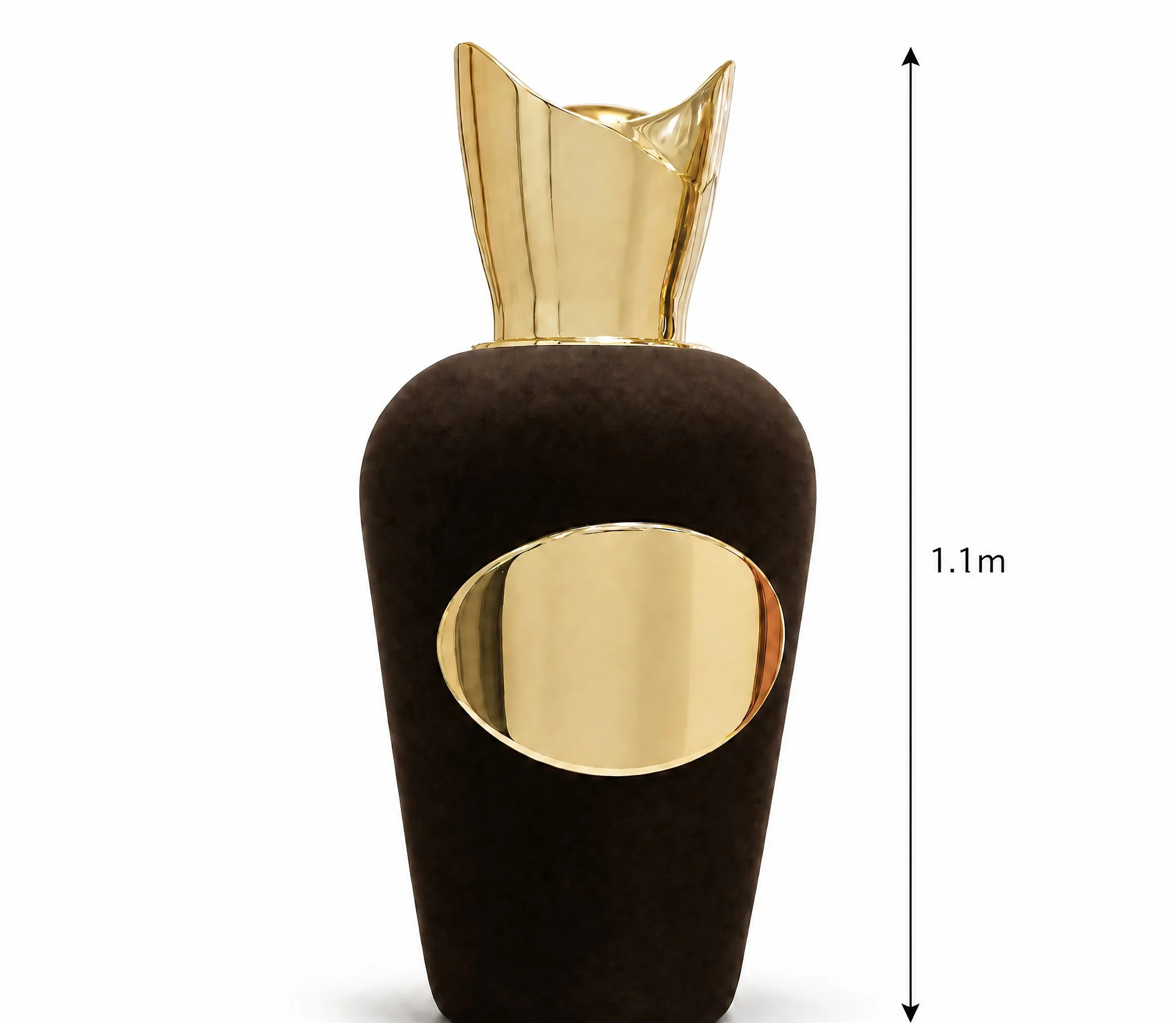
Fiberglass answers the opposite brief. The shell carries its own structure, so a 1.1 m body stays light enough for two people to move, which is what the1.1 m velvet-flocked build rests on. It can be laid up as a single form, so a bottle shape has no seam for the eye to find. And it takes paint, lacquer, metallic coating and textile finishes on the same surface.
That third property is what we use for flocked finishes. Flocking sprays a layer of adhesive, then applies short fibres electrostatically so they stand upright. What it buys you is a matte surface that absorbs light instead of throwing it back, and a high-gloss body under a window spotlight is the hardest thing in the shop to light. A matte body keeps the shape readable from any angle.
Fiberglass is also the calmer material in transit. A shell that flexes and recovers survives a knock on launch night, where a large acrylic wall cracks. That difference never shows up in the render and it always shows up in the crate.
The size where the answer flips
Below roughly 0.6 m to 0.8 m, acrylic and resin dominate. Above it, fiberglass becomes the default for an opaque body. The break is not absolute, and it is worth saying so rather than quoting a rule: our 1.2 m prism display is still acrylic, because the brief called for transparency. That piece is built as three parts, a cap, a body and a lit base, which travel separately and assemble on site.
Resin belongs in the same small-size band as acrylic. For a handled form with fine detail, shallow ribs or a small hinged lid, resin takes a fine mould impression without the surface sinking between the features, and it takes a pearl coat cleanly. Our shell display stand is built in resin for exactly that reason rather than in fiberglass.
What the material changes about freight
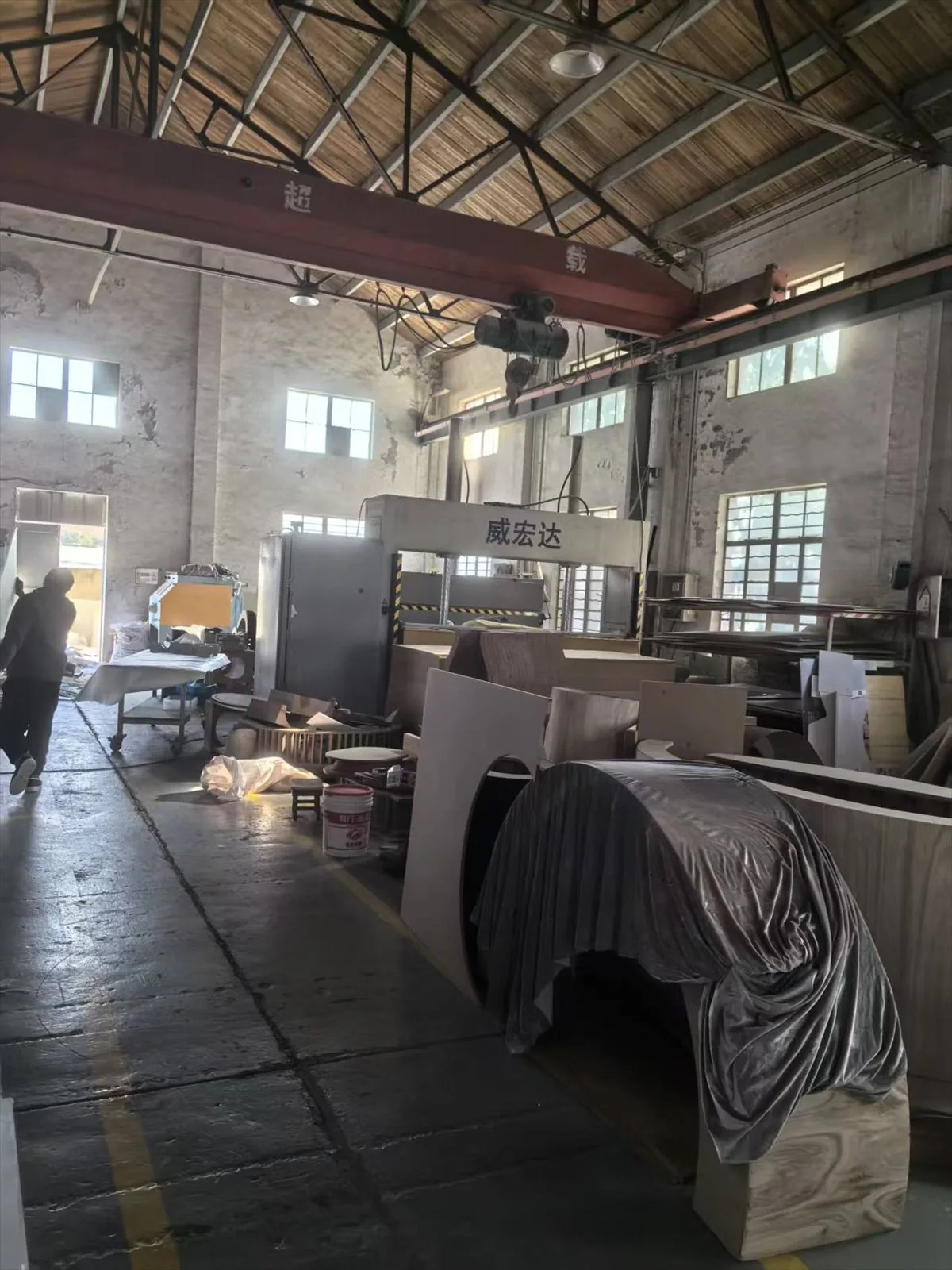
Two pieces of the same height can leave the workshop in very different crates. We set fixings, levelling and weighting at the drawing stage, so those are designed rather than improvised on installation day. Where a piece is too large to travel in one part, it is split into sections that assemble on site, and it ships with labelled sections and assembly notes so your installers are not guessing.
This is where the material decision comes back around. Crating a clear acrylic face that nobody can refinish on site is a stricter job than crating a painted fiberglass body, and a shipped display usually travels more than once in its life: launch, then archive, then a new window. Tell us the destination and the handling conditions and the crate gets written for that route instead of to a generic standard.
Where each material is the wrong answer
Acrylic is the wrong choice for a large opaque body. You pay the weight and the cost of a clear material in order to look at a painted surface, and a wall thick enough to hold a piece over 1.2 m asks for a doorway and a crew most venues do not have.
Fiberglass is the wrong choice if the brief is genuinely see-through. There is no version of it that reads as glass, and painting a transparent effect onto a moulded shell produces a different product rather than a cheaper one. Finishes are the other limit: flocked and pearl surfaces are interior finishes, permanent direct sunlight will shift them, and an outdoor brief is a separate specification rather than a colour choice.
What to send us
Four things turn a material question into a quotation:
- The product itself, a scan or a CAD file. A photograph with a scale in the frame works. A file works better, and it saves a round of questions.
- The height you are aiming for, and whether it has to be see-through. Those two answers narrow the material before anything else is discussed.
- Where it will stand and how far away it will be viewed. A counter piece and a window piece of the same height are different builds, not a zoom.
- Quantity, destination and date. The destination decides the crate. The date tells us whether the schedule is comfortable or tight.
Minimum order is from 1 piece, and sampling takes around 15 days. The two lines behind this article aregiant cosmetic replicas and display props, and the rights side of the work is simple: we reproduce packaging you own or are authorised to reproduce, and pieces ship unbranded by default.
Common questions
Can a 1.5 m display be built as one clear acrylic piece?
We would not build it that way. Past about 1.2 m a single clear form becomes heavy enough to change the crate, the doorway and the installation crew, and one damaged face condemns the whole thing. Our 1.2 m prism display is split into a cap, a body and a lit base instead.
Which material is cheaper, acrylic or fiberglass?
There is no per-kilogram answer, because the two materials are usually quoting different pieces. Below roughly 0.6 m to 0.8 m, acrylic or resin is normally the simpler route. Above that, an opaque body is usually cheaper in fiberglass once the weight, the wall thickness and the crate are counted. Send us the height, the finish and the destination and we will quote the actual piece.
What is your minimum order, and how long does a sample take?
Minimum order is from 1 piece, and sampling takes around 15 days. Production lead time is quoted against your specification rather than promised as a generic figure, because a crated 1.1 m piece and a 0.4 m counter model are not the same schedule.
Still deciding between the two? Seedisplay props for retail and exhibitions, or read theordering FAQ on MOQ, sampling, materials and shipping.