
2026-10-21 · 9 min read
A 2.4 m Dropper Bottle Display Where the Light Does the Moving
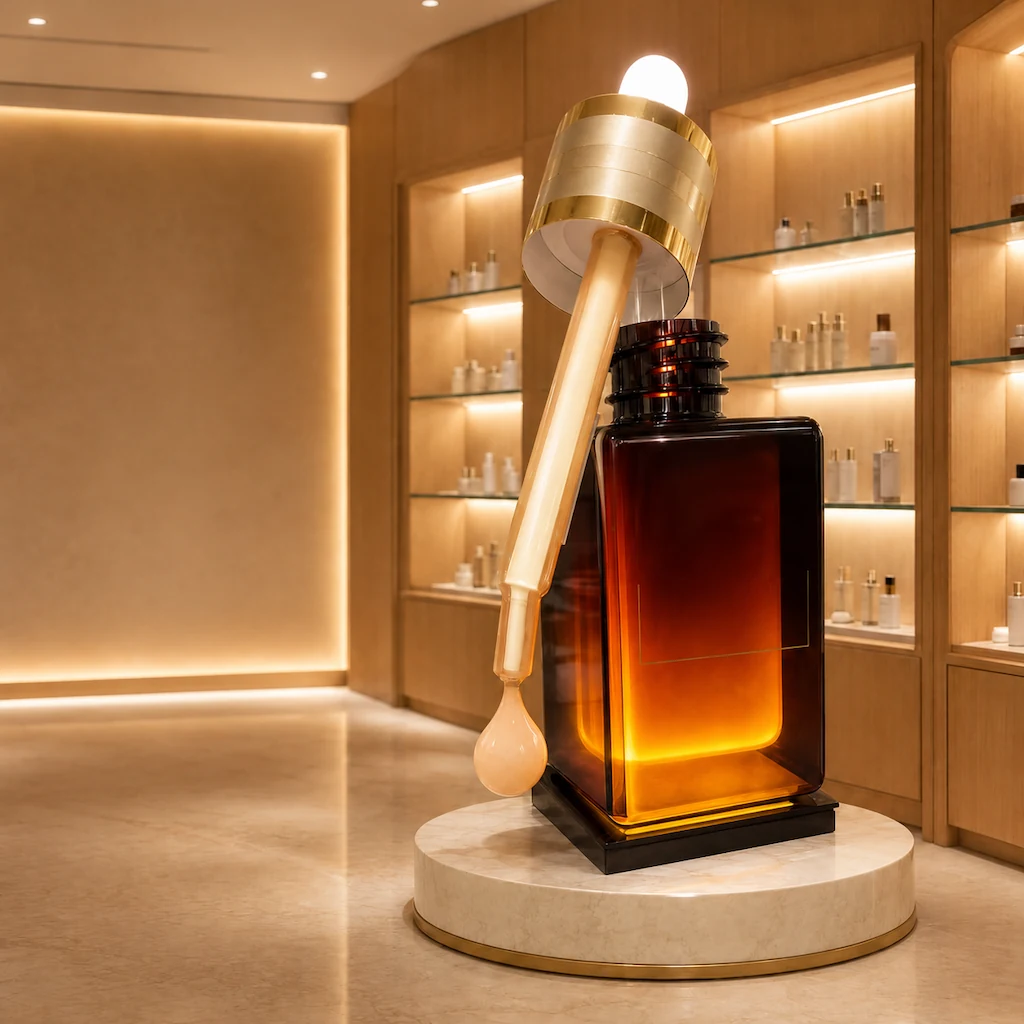
A dropper is a moving object. That is the whole of its character: the bulb compresses, the tube fills, the level drops, and the serum runs back down the inside of the glass. Take the movement out and what is left is a bottle with a stick leaning out of it.
This one is 2.4 m tall, or 8 ft. That is the height we publish, not the only height we build: overall size is a variable on this piece, and it is quoted per brief, because a shopping-mall window and a trade-show plinth do not ask for the same footprint. The 2.4 m version is used as the worked example below because it is the size where every decision shows. The body is acrylic, the cap is dark brown, the collar is gold-finish metal, and the whole thing sits on a detachable key-joint plinth. Colour is matched to the buyer's artwork, and the label is engraved or printed to the same file.
What 2.4 m does to the build
Nothing at this height ships assembled. The piece splits at the collar and at the plinth, and each part is finished, inspected and wrapped on its own before it goes into the crate. The split sits on the collar because the original bottle already has hardware there: the join reads as a metal band rather than a cut line across a shoulder.
Change the requested height and three things move with it: where the piece splits, how far the light has to travel from the plinth, and the crate. The design language does not change. On a smaller unit the body often becomes one piece and the collar stops being a joint. On a taller one the light path is long enough that the sequence has to be re-timed; leave it as it was on the shorter build and the body reads bright at the foot and dead at the shoulder. That is why we quote height first and price second.
The plinth is where the engineering hides. It carries the driver and the connections, and it is the part that comes off first if anything has to be serviced. A lit piece that has to be laid on its side to change a module will not be serviced at all; it will be lived with until it fails. Detachable key-joint means the body stays upright and two people lift the base away.
Weight is the other constraint, and it is the one buyers underestimate when they photograph a bottle and ask for it at eye height. The crate for a 2.4 m unit is not a parcel. Send the delivery address with the enquiry and the freight is quoted with the piece, not bolted on afterwards.
A printed pipette stops reading as glass
The first version of any oversized dropper is a tube with something pale inside it. It looks correct in a render and dead in a window. The reason is that a real pipette is not a solid object: it is a thin wall of glass with a film of serum on the inside, and the way light behaves in that film is what your eye reads as liquid.
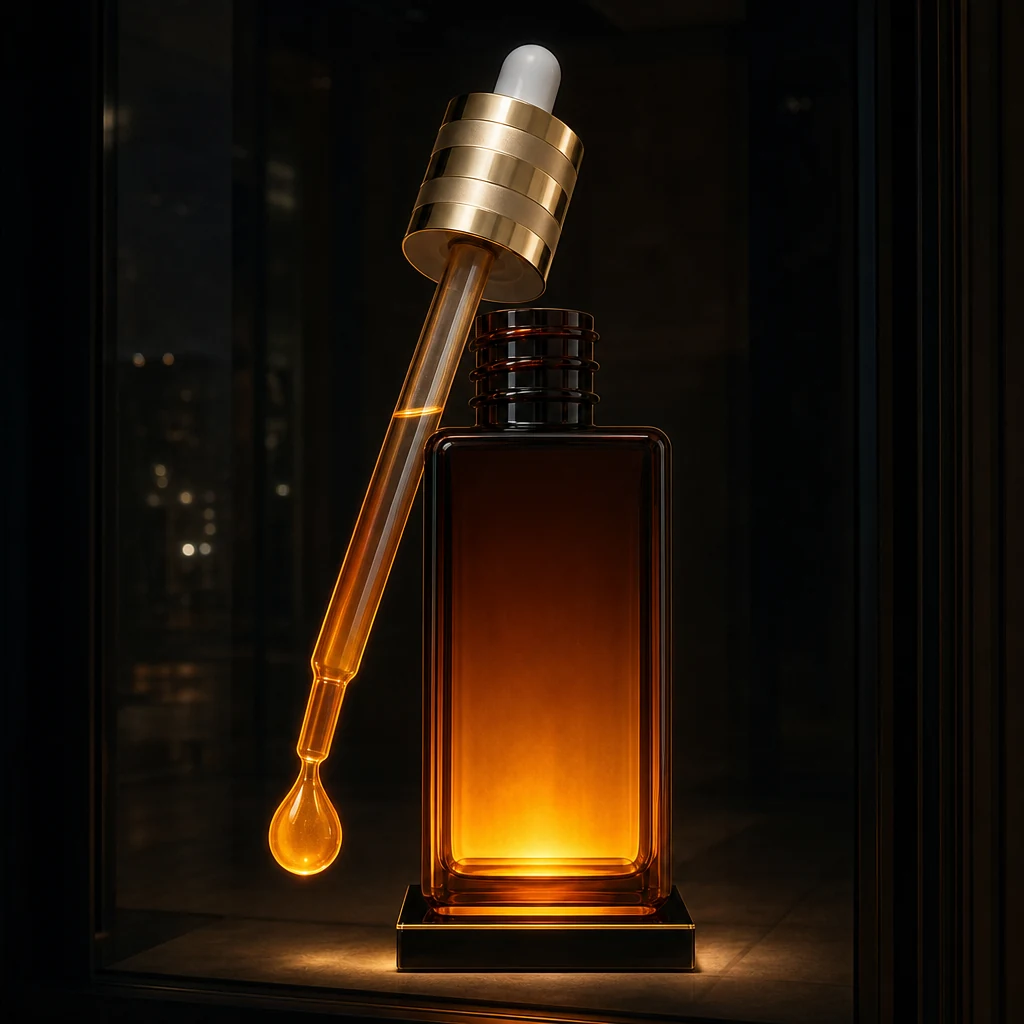
So the tube cannot be painted. The pale stem and the bulb are opaque parts, correctly, because that is what the real dropper looks like. The liquid has to be light, or it has to be nothing.
How the flow is simulated
Two light sources, timed against each other. One sits behind the pipette and is masked so the glow only appears inside the clear section of the tube. The other runs through the body from the plinth. The sequence brightens the tube first, holds the bright band at the height of the liquid line, then lifts the body light underneath. Read at speed, that is a drop arriving at the shoulder and the bottle filling.
The hard part is pace. A cycle that runs in about a second looks like a scanner in a supermarket. Too slow and it reads as a pulse, which is a lamp, not a liquid. We set the timing against the real product, and the only useful reference for that is video of the actual dropper being used. A still photograph tells us the shape and the colour. It cannot tell us how fast the level falls.
Sequencing also gives you something a static glow cannot: a reason to look twice. A visitor who catches the loop halfway will wait for it to come round again. That is the difference between a lit prop and a display that holds someone at the glass for ten seconds.
What the light will and will not do
It will not be liquid. There is no meniscus that tilts when the piece is nudged, no bubble rising, no change in viscosity between a serum and a toner. Stand against the glass and look for a minute and you will see that the movement repeats. The piece is designed to be read from across a floor, which is where a window display is actually looked at, and at that distance the sequence does the job its brief asks for.
Daylight is the other limit. An internal glow is competing with whatever is outside the window. In a north-facing window the effect holds all day. In a window with direct sun on the glass it is visible at dusk and flat at noon, and the two fixes are a shade on the glass or a brighter module that runs hotter inside the plinth. Both are decisions for the venue, so they belong in the brief.
This is an indoor piece. We do not build it for exterior use, and we do not quote it in glass at this height. Structure and lighting carry a 12-month support term; the tariff code we declare for the model is 3926.90.90.
What to send with the enquiry
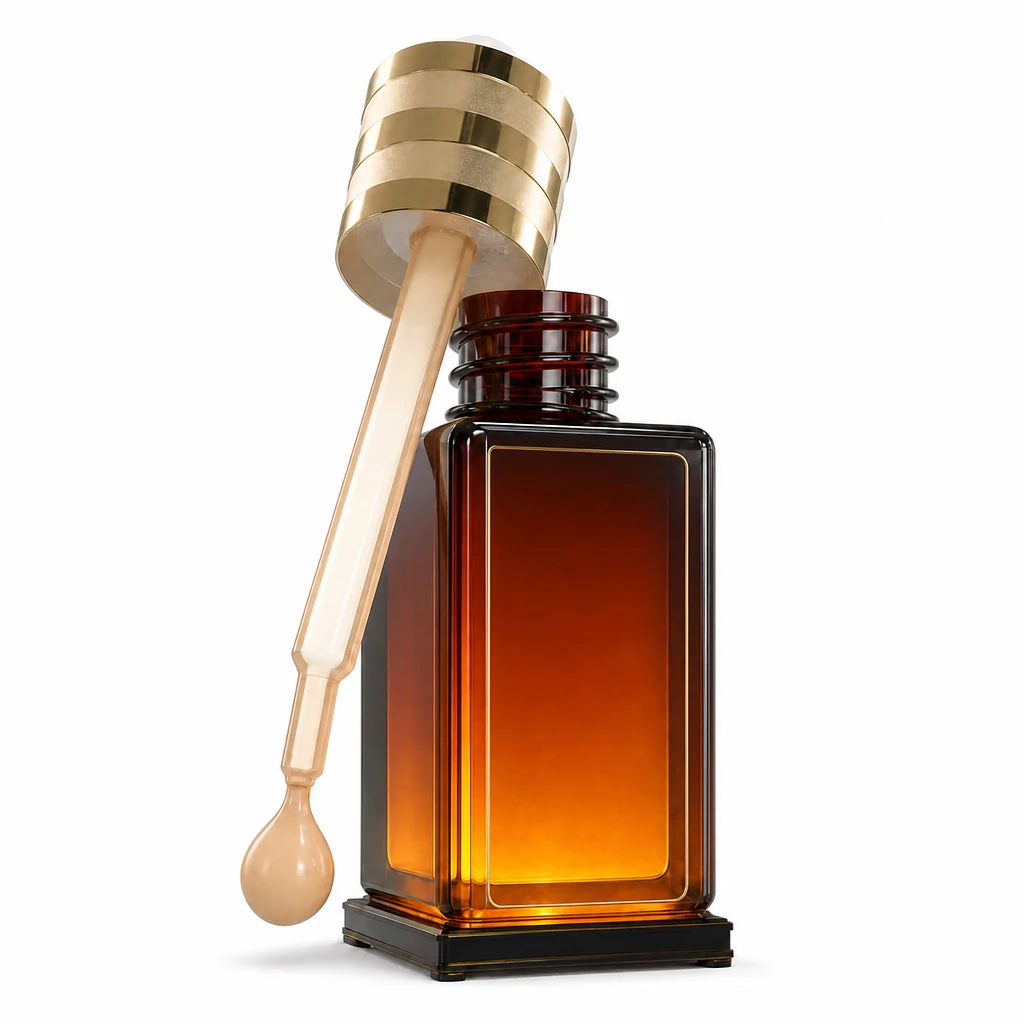
The bottle is the best reference, and after that a short video of it in use. Failing both, straight-on front, side and top photographs with a ruler in frame, plus the height you want. Beyond the artwork, five things change the quote:
- the target overall height, and whether the cap or the dropper carries the extra;
- which parts have to stay transparent, and which can be opaque;
- the label file, and whether the branding is engraved into the material or printed on it;
- where the socket is, relative to where the plinth will stand;
- whether the sequence must loop all day or play on a trigger, and the destination for freight.
One piece is enough to start: the minimum order is from 1 piece, sampling takes around 15 days, and production runs 20-30 days, depending on order quantity. Send the bottle, its drawings or the video through ourcontact page. Thefactice perfume bottle range lists the heights and finishes we build as standard, and thenotes on precise reproduction cover how a cap and collar are matched to an original. If the body material is still open, the comparison in acrylic versus fiberglass explains where each one stops making sense above 1 m.
Common questions
Can the display be made at a height other than 2.4 m?
Yes. 2.4 m / 8 ft is the size we publish and the one this article walks through; other heights are built from the same specification sheet. Send the height you need with the artwork and we return the split points, the crate size, and whether the internal lighting is still the right answer at that size. A smaller piece is not this one with the numbers reduced: the split, the plinth and the quantity of light all change with it.
Can the light in the pipette be timed to a specific event?
Yes, within limits. The sequence runs from a driver inside the plinth, so timing is set in the controller and can be changed at the venue. What we need from you is the length of the cycle and whether it repeats or plays once on a trigger. A loop running all day and a one-off press-and-play are quoted as different jobs, because a loop at full output builds heat in a closed plinth.
Does the body have to be glass to look like glass?
No, and at 2.4 m it should not be. This body is acrylic. A glass body at this height fails in freight as a total loss rather than a repair, and it cannot take an internal light module. Acrylic keeps the amber depth and holds an edge.
How much light is needed in the room for the effect to read?
An internal glow loses against direct daylight. In a window with sun on it the sequence is still visible at dusk but flat at noon. If the glass faces the sun, plan a shade or accept a brighter module with more heat. We will say which of those we recommend once we know the orientation.
What is the minimum order and how long does a build take?
Minimum order is from 1 piece. One unit is a normal order here rather than an exception: most of these pieces go out as a single unit for one window or one launch. Sampling takes around 15 days and production runs 20-30 days, depending on order quantity. A lit unit needs a lighting test before it is crated, and that test is booked into the same schedule as the finishing.
The images in this article are design renders of this build, not photographs of a shipped unit. They follow the production sheet: 2.4 m / 8 ft overall height, acrylic body, dark brown cap on a gold-finish collar, internal LED, detachable key-joint plinth. 2.4 m is the published size, and other heights are built to the same sheet; the minimum order is one piece. Brand artwork shown on the original listing has been removed; every label on our builds is produced to the buyer's own file.