
2026-10-20 · 8 min read
1 m Perfume Bottle Replica: What Changes When the Material Is Clear or Opaque
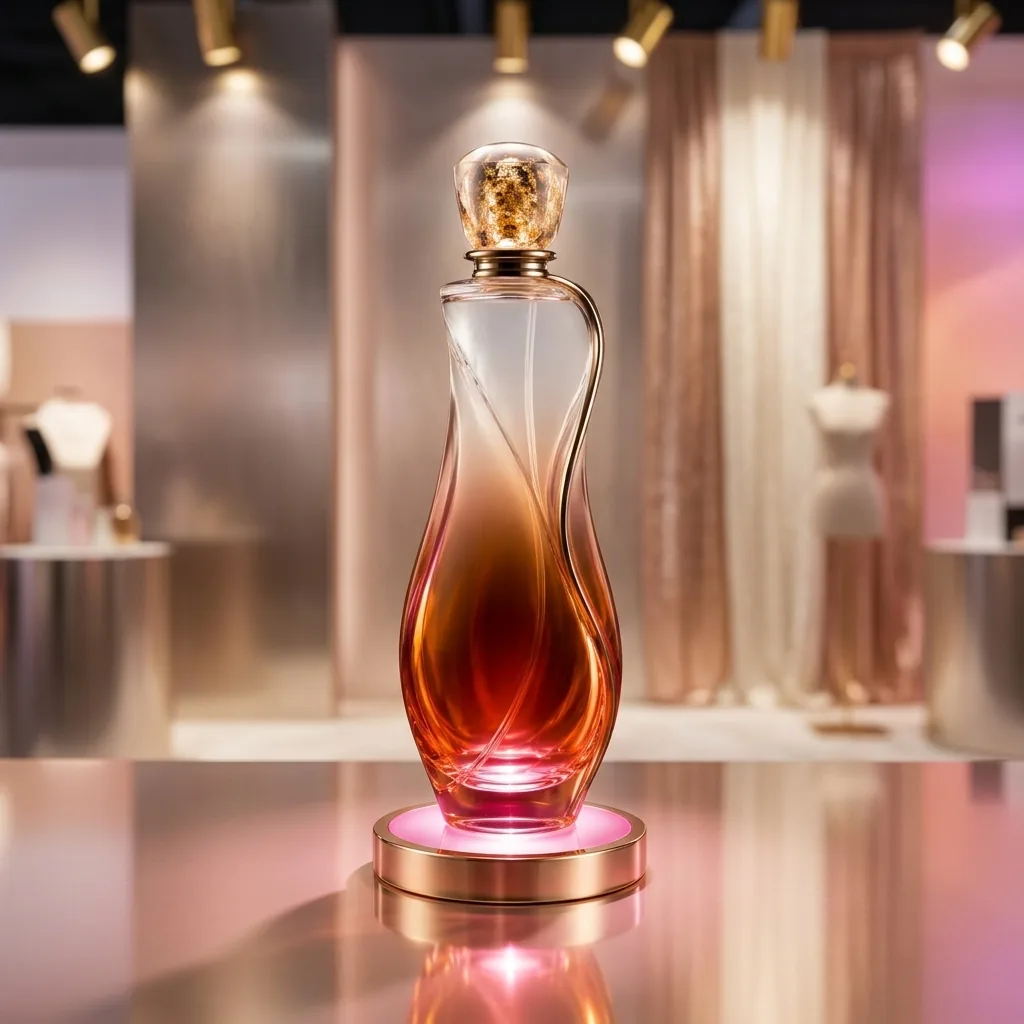
A bottle with a twisted wall is not hard because of its outline. The outline is easy. The hard part is that the wall itself moves: it comes forward and goes back over 800 mm of height while the outer silhouette stays at 280 mm wide and 150 mm deep at the base. Enlarge that by four and the movement either reads as a deliberate ribbon or as a dent.
The piece below is a 1.0 m replica built on the M4 pattern: 180 mm cap, 800 mm body, about 20 kg net weight, cast in transparent resin, gradient dyed, standing on a programmable RGB base. What follows is what the material choice actually changes on a job like this, not what it looks like in a photograph.
The build is split before it is scaled
Nothing at this height ships as one object. The model is split into cap, body and base, and each part is finished and inspected on its own before assembly. The order exists because the last thing anyone wants to do with a 20 kg polished body is hold it steady while a cap is fitted to it.
Where the splits go is a design decision, not a production one. A cast body has no seam along its length, which is the reason to cast it: the ribbon edge never has to be repaired. The joins that remain are at the neck collar and at the base, and both sit on a line the original already has. The cap lands on a metal collar, so the join reads as hardware rather than as a seam on a plain shoulder.
The cap centreline governs everything above the neck. On a 1 m piece, 2 to 3 mm of drift between cap and body reads as a lean at three metres. We set that line first and work down from it.
A transparent body is judged from the inside
Transparent resin is poured, not bonded together from sheet. Everything the material holds stays visible, so the work moves into the mould and into the mix: resin degassed before it is poured, colour stirred through rather than sprayed on, and nothing trapped against the wall.
Bubbles are the first failure. A bubble the size of a pin head near the base looks like a chip once light travels through it, which is why the bottom 100 mm of a lit body is inspected before anything else. The second is heat. An 800 mm pour cures in stages. If it goes off too fast, the middle cures hotter than the skin and the piece crazes from the inside weeks later, already in a window.
The outside is a separate job. A cast body leaves the mould with a dull skin and is polished by hand through the grits. Over-polish the ribbon fold and the edge goes soft, which is the same defect as a soft mould, only harder to see until light hits it.
Transparent parts also scratch, so they keep their protective film until the last step. Handling a 20 kg polished body twice is how corners get damaged, which is why the piece ships in parts.
An opaque body trades joints for surface
An opaque body is normally a composite shell laid over a form, then filled and sanded. Seams disappear under filler and paint, and the weight usually comes down against a solid casting. That is the trade.
The cost is on the surface. Every coat adds thickness, and thickness softens an edge. Spraying an opaque body with a ribbon that has a crisp fold means either masking the fold or accepting a slightly rounder line than the original. We mask. It is slower, and it is the difference between a replica and an approximation.
The gradient is depth, not decoration
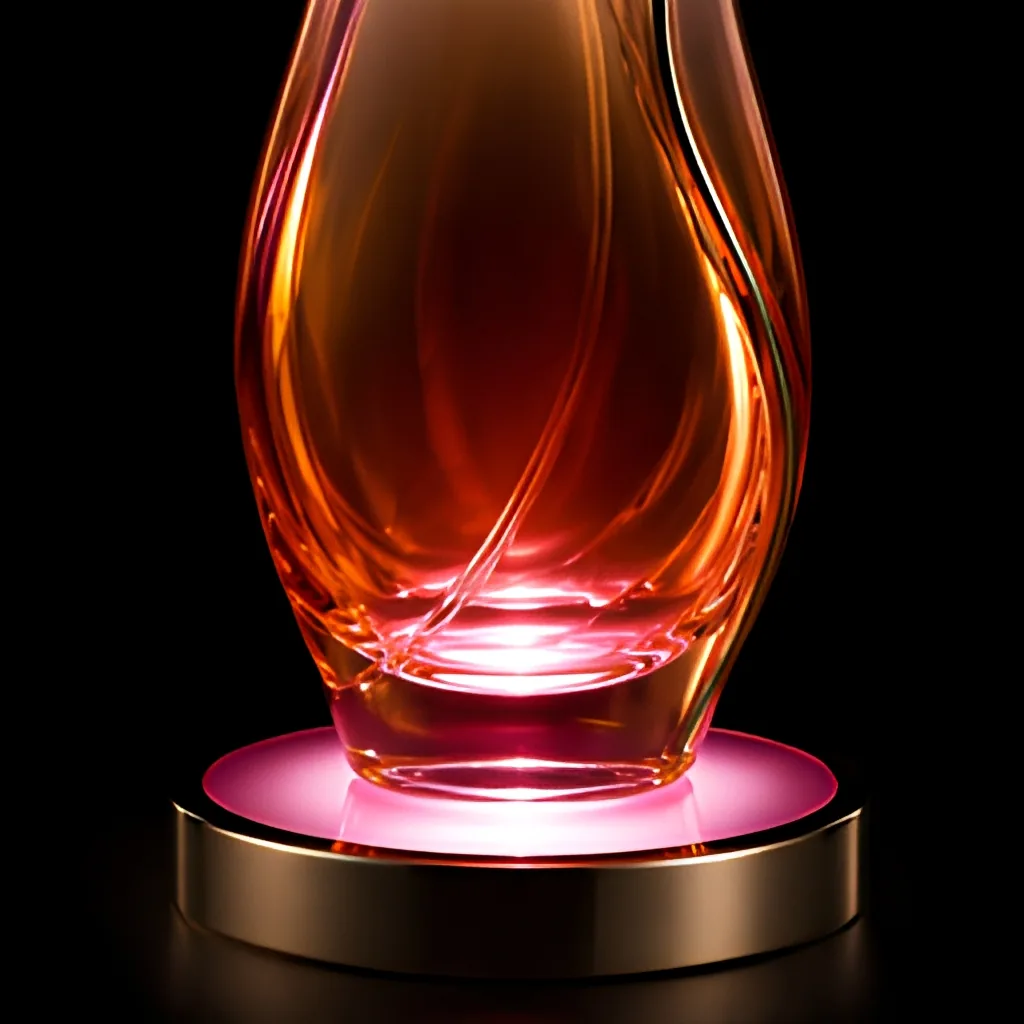
The three colourways on this model run deep amber, rose and ocean blue. In all three the colour is densest at the base. That is not a design choice so much as physics: light entering the base passes through more material at the thick bottom than at the thin shoulder, so the same dye reads deeper where the wall is longer. The gradient is produced by the form.
A dyed body holds its colour. It will not rub off, and it does not fade at the edges of a sprayed panel. The reverse side of that is you cannot correct a batch afterwards. If the chip is wrong, the body is wrong.
On an opaque body the gradient has to be sprayed, and then the transition sits on the surface where hands and cleaning cloths reach it. This is the single clearest reason to keep a gradient bottle translucent when the brief allows it.
The lit base only works through a translucent wall
The RGB base under this piece is programmable, so a colour can be set for a launch night and changed for the next campaign. What the light does inside the body matters more than the controller.
Light enters at the base and travels up the wall. Where the wall is thin, it passes through and the body glows. Where the wall is thick, it scatters and reads as a saturated core. That is why the render shows a bright ring at the foot and a soft falloff above it. Swap in an opaque body and the same base produces a lit plinth with a dark bottle on top. Still usable, different object.
Gold leaf inside a clear cap
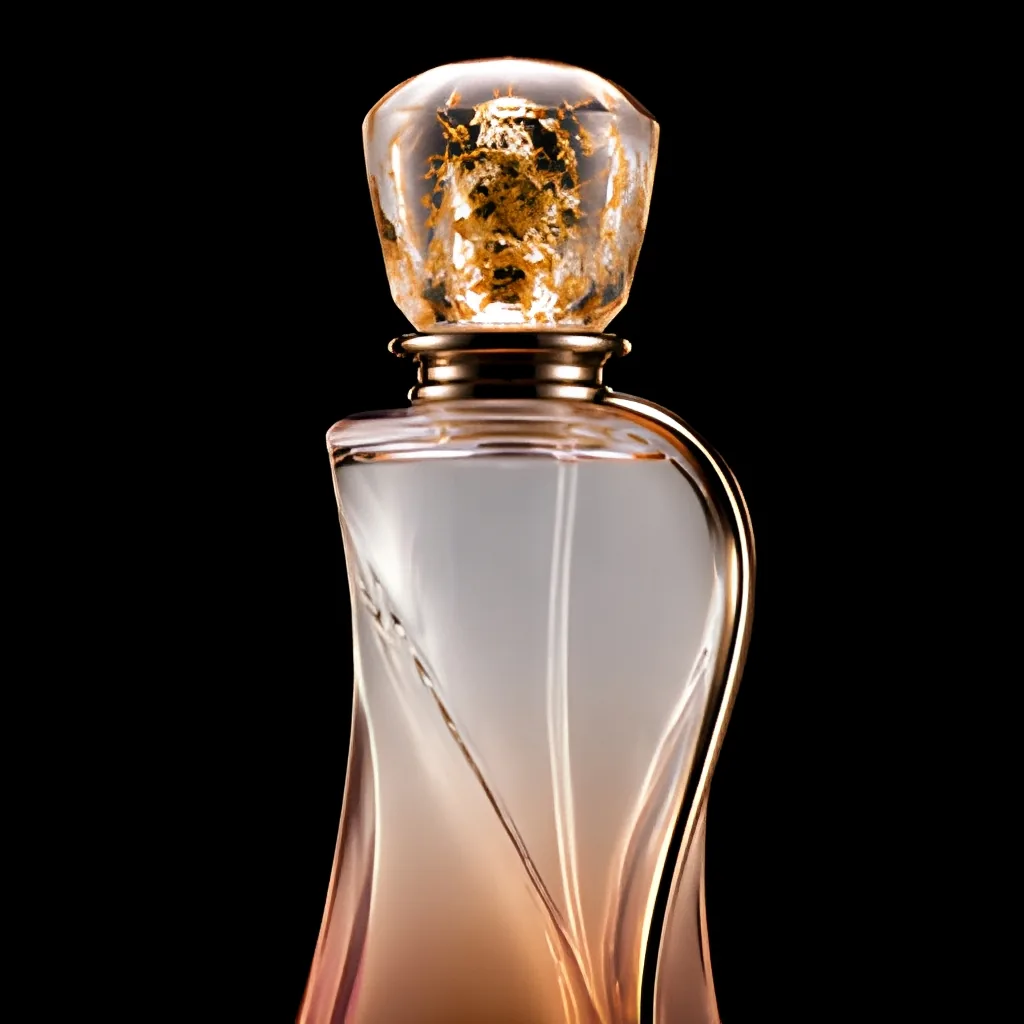
The 180 mm cap is the part most likely to be misread as easy. Gold on a cap is usually plating. On this piece the leaf is cast inside the transparent resin, so it stays bright because air and fingers never touch it.
An inclusion is harder to control than a coating. Leaf that clumps reads as dirt; leaf that is spread too evenly reads as glitter. We lay it against an approved sample, and that sample is the standard for the run, not a picture of a previous cap.
What we will not build at this size
We will not quote a 1 m bottle in real glass. A glass body at this height carries serious weight, needs annealing to survive its own thickness, and fails in freight as a total loss rather than a repair. Transparent resin at the same size comes in around 20 kg and ships in parts. Where a client wants the look of glass, we cast it in transparent resin and write "resin, not glass" on the drawing so nobody downstream assumes otherwise.
We also will not match a colour from a phone screen, and we will not hide a soft moulding behind paint. Both get discovered at the venue.
What to send with an enquiry
The bottle itself is the best reference. If shipping it is impractical, send straight-on front, side and top photographs with a ruler in frame, plus the target height.
- which faces have to stay transparent, and which can be opaque;
- a physical colour reference, or the colourway name if it is one of ours;
- the installation: counter, window, plinth, or open floor;
- whether the base needs to change colour during the event;
- the destination, because crating for a 1 m piece is priced with the freight.
Minimum order is from 1 piece, sampling takes around 15 days, and production runs 20-30 days, depending on order quantity. Send the bottle or its drawings through our contact page and tell us which faces must stay clear. Ourfactice perfume bottle capability page lists the sizes and finishes we build regularly. If the choice is still open, the comparison inacrylic versus fiberglass for giant props covers where each material stops making sense, and the1.2 m prism acrylic build notesshow what a fully clear body costs in polishing time.
Common questions
Can you copy a bottle whose body is asymmetric or has a twisted wall?
Yes. The body is cast in one piece from a mould taken off the original, so the twisted wall is reproduced by the tool rather than by hand. Cap and base are separate parts and are assembled after each is finished. The only joins are at the neck collar and at the base, and both sit on lines the original already masks.
Is a clear body or a solid-colour body more expensive?
There is no fixed rule. A transparent body spends its labour on the mould, the degassing and the polishing, because anything inside the material shows. An opaque body spends it on the shell, seam filling and the sprayed finish. Send the drawing and the height and both routes can be quoted against the same brief.
Can the colour of a dye-through body be matched exactly?
It is matched to an approved physical sample, not a screen. We cast a colour chip first and you sign it off before the body is made, because dye density looks different behind 20 kg of material. A photograph of the original is a starting reference only.
What is the minimum order, and how long does a sample take?
Minimum order is from 1 piece, and sampling takes around 15 days. Production time is 20-30 days, depending on order quantity: a single lit piece and a run of ten do not leave the workshop on the same schedule.
The images in this article are design renders of the M4 pattern, not photographs of a finished unit. Dimensions follow the production specification sheet for the model: 1.0 m overall height, 180 mm cap, 800 × 280 × 150 mm body, about 20 kg net weight. The body is cast in transparent resin with a stainless steel accent trim; the cap is transparent resin with a gold leaf inclusion.